


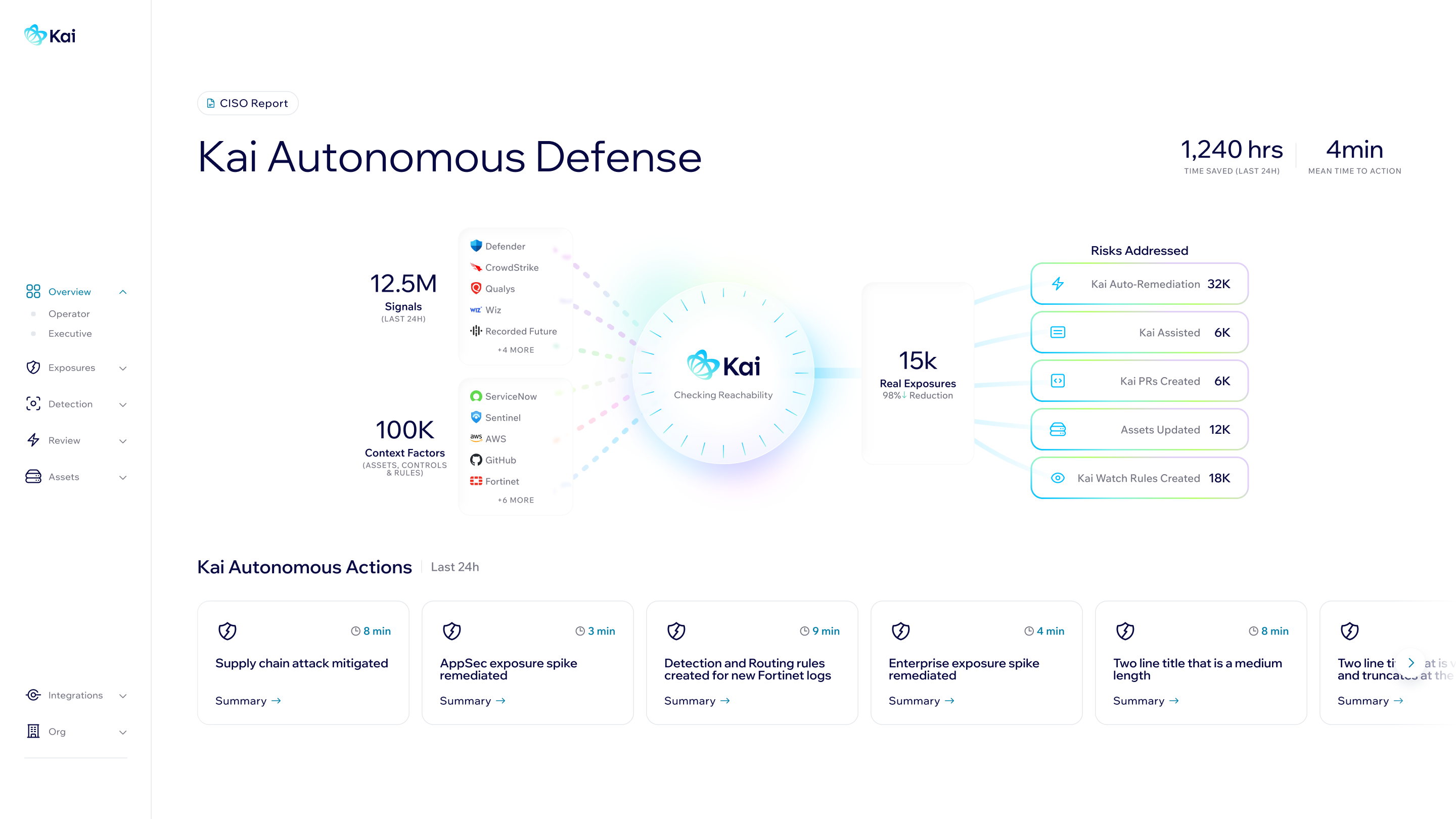
What machine-speed defense looks like
Attackers don't think in categories. Defense shouldn't either. Today each step of the response belongs to a different tool and team, so the exposure waits at every handoff. Kai runs every step on one platform at machine speed. What takes human-led teams days, Kai executes in minutes, driving risk toward zero through auto-remediation. Human defenders don't just keep up. They become superhuman.
One unified AI-native platform for
Autonomous Defense
Continuous Threat Exposure Management (CTEM)
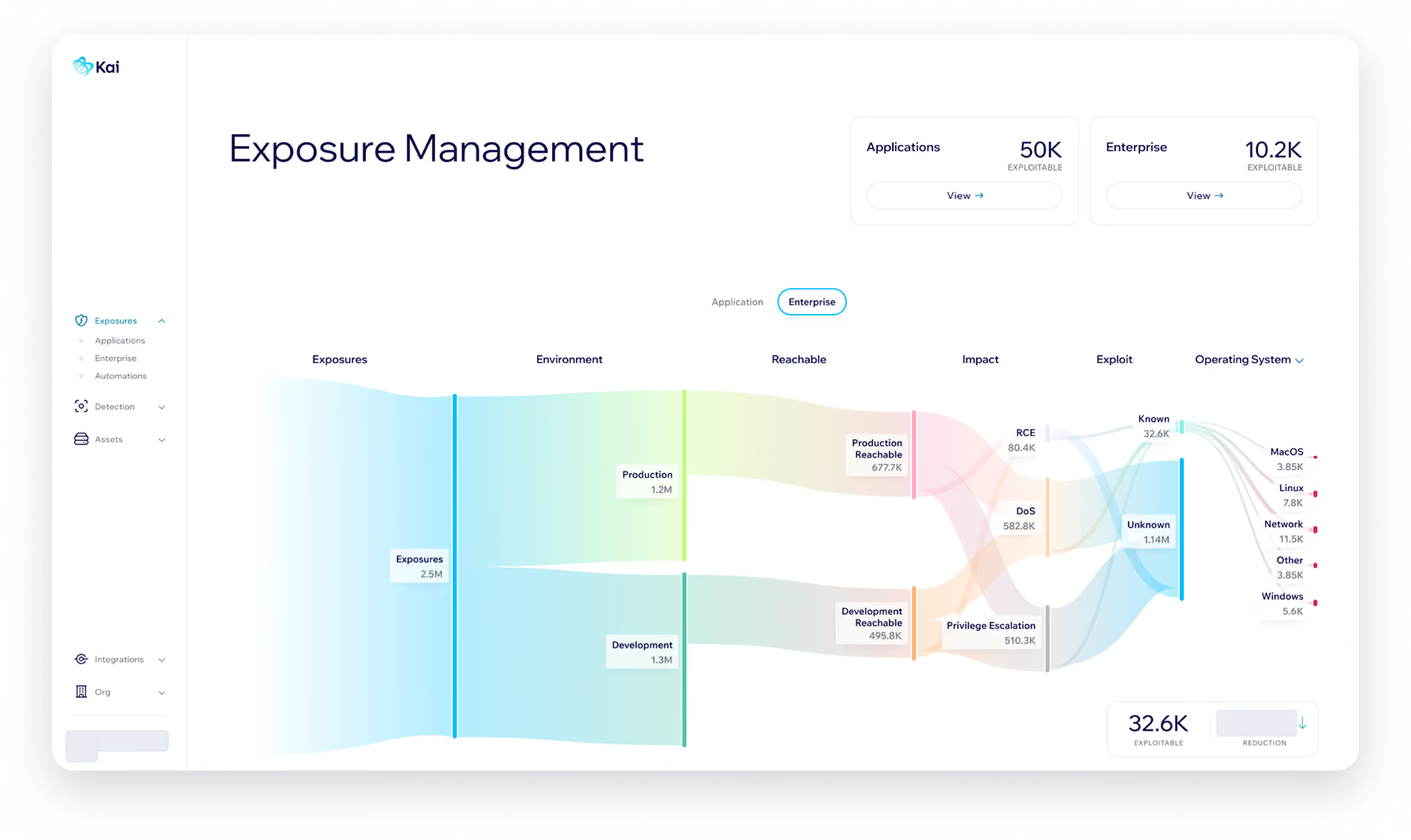
Realize the promise of CTEM with an autonomous platform that completes the cycle end-to-end. Kai runs all five phases, then adds two more: executes the assigned fix immediately, and watches exposed assets with targeted detection rules until remediated.
Align scope to the business applications and units that own the risk
Free analysts from findings that cannot be exploited in your environment
Accelerate agreement with IT by attaching proof to every finding that survives

External Attack Surface Management (EASM)
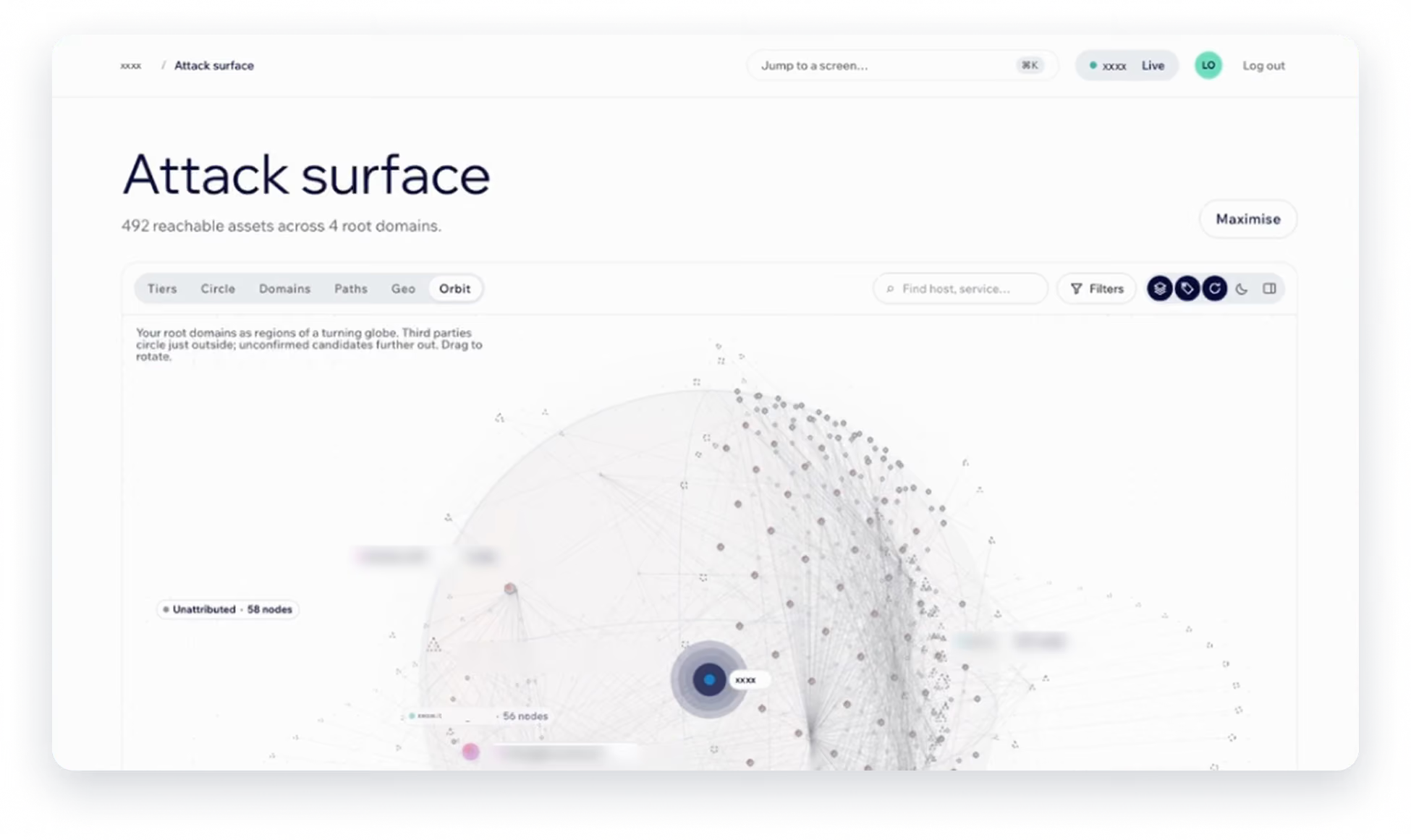
See your organization the way an attacker does. Most exposure programs only see the assets their tools already know, while attackers start with your company domain. Kai unifies internal and external exposures into a single remediation plan, accelerating the path to zero.
Find the assets your inventory misses, each with evidence and a confidence score
Cover what attackers target first, including exposed AI services and API endpoints
Fix internal and external exposures in the same queue
Cyber Asset Attack Surface Management (CAASM)
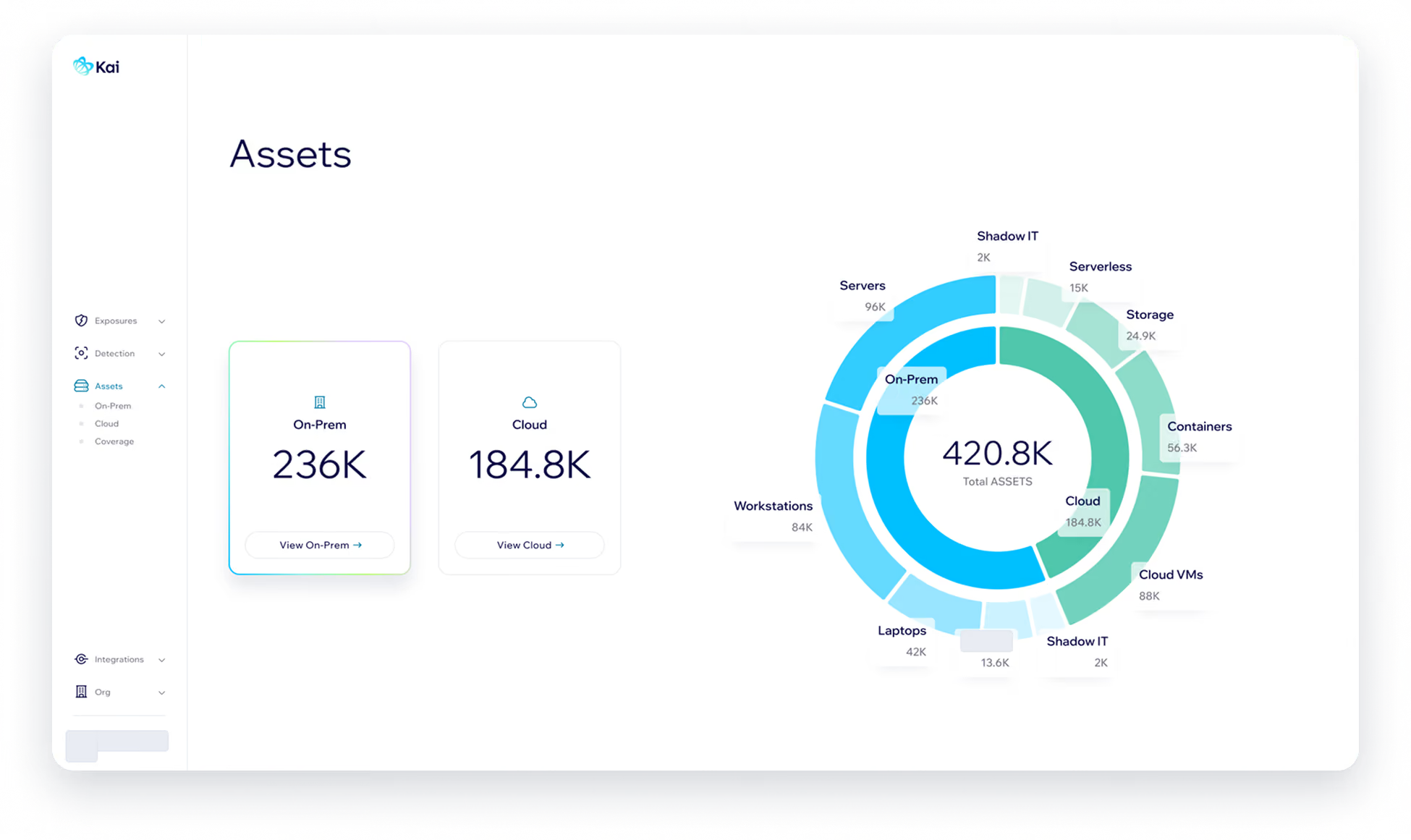
Every decision downstream depends on the asset record being right. Get the owner, the environment, or the business application wrong, and the fix goes to the wrong team or gets worked at the wrong priority. Kai's agents interrogate your CMDB, endpoint, cloud, identity, scanning, and code systems, then rebuild each asset record from the evidence they find.
Gain owner, environment, and business application on every asset
Avoid unplanned upgrades by surfacing end-of-life with lead time to act
Close coverage gaps by returning unprotected assets to EDR and scanning
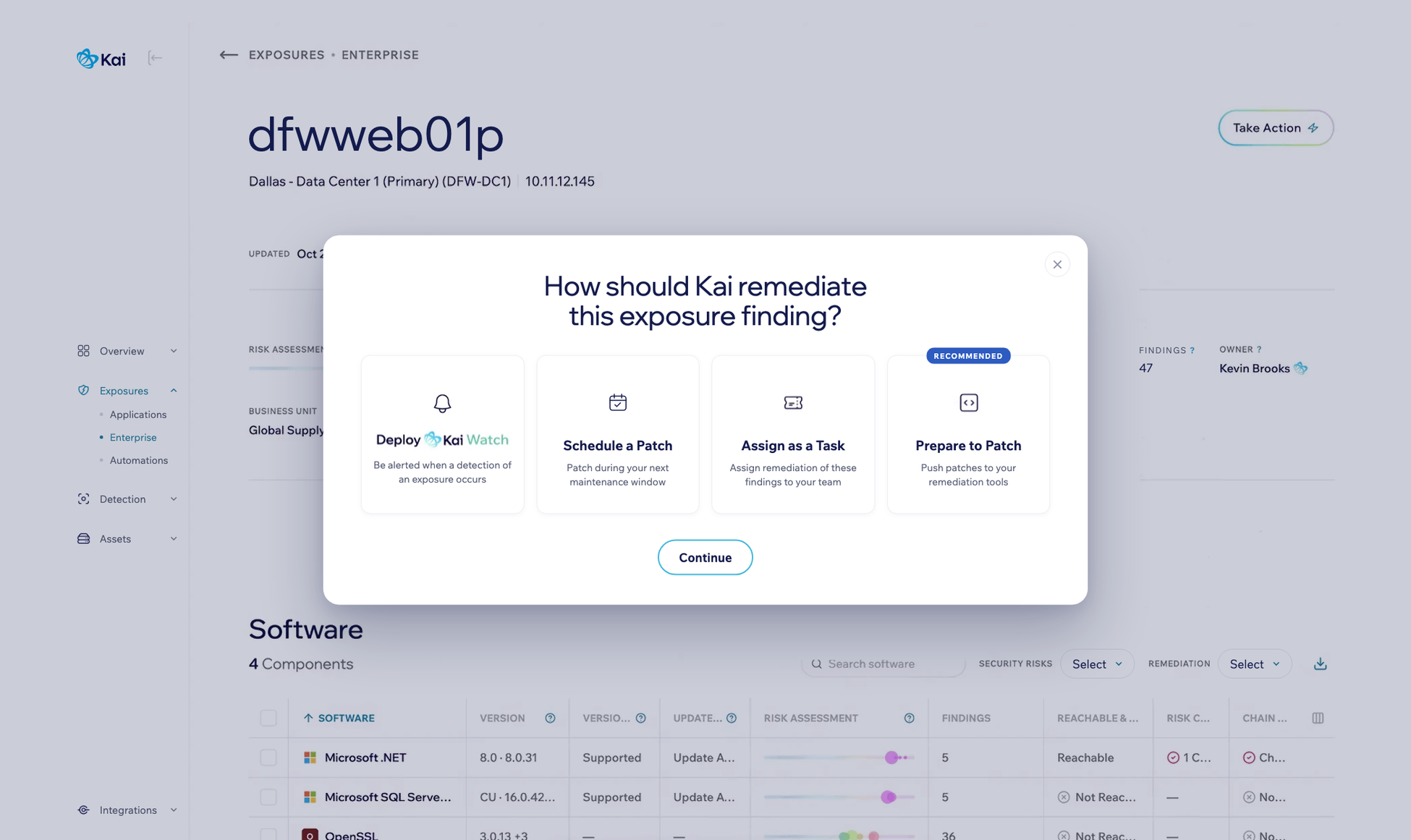
Autonomous Exposure Remediation
Eliminate the silos that prevent remediation across your entire attack surface. Most tools stop at the ticket, which is exactly where the delay starts. Kai writes the change itself, and where a maintenance window blocks the patch, specifies the configuration change to the controls you already run instead, so the exposure does not stay open while the window is waited out.
Eliminate rework from tickets rejected as unactionable
Accelerate time to fix with changes shaped to the owner's maintenance window
Reduce exposure windows inside the boundary you set, and retain control outside it
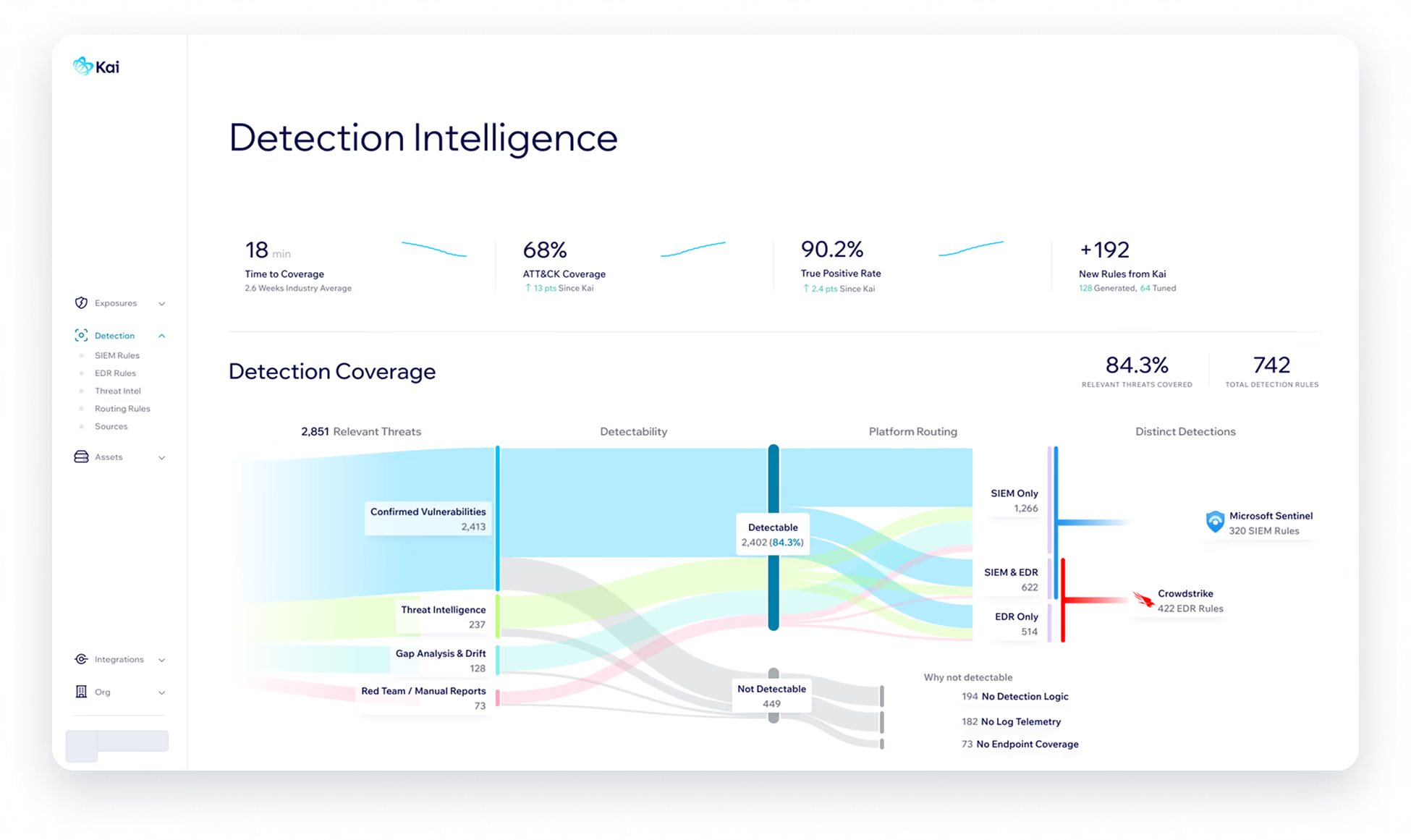
Detection Intelligence
Not everything can be patched at once. Some fixes wait on a maintenance window, a vendor patch, or a release, and the exposure stays open the whole time. Kai closes that gap with detection built for your environment.
Gain coverage in hours, inside the SIEM and EDR you already run
Cut alert noise with rules deployed only where the exposure is open
Reduce risk during the window when a patch cannot land
What security leaders are saying




Frequently asked questions
What does the Kai Autonomous Defense Platform do?

The Kai Autonomous Defense Platform executes the exposure lifecycle end to end without human handoffs. Kai aggregates findings from existing security and IT systems, determines reachability and exploitability, discards what cannot be exploited, attaches evidence to what survives, and then remediates: writing the change, routing it to the accountable owner, or deploying a compensating detection when a patch is blocked. Each exposure is carried as a single source of truth from discovery through executed change.
How does Kai determine which findings are real risk?
Agents establish whether an exposure is reachable and exploitable in the specific environment, which removes over 90% of findings from the queue before anyone reviews them. What survives carries attached proof, so remediation is argued from evidence rather than from a CVSS score. In production estates this has meant 10 million findings reduced to 4 million confirmed as real risk.
Does Kai patch production systems by itself?
Only inside a boundary you set. You define where Kai may act by environment, asset class and change type. Inside that boundary Kai executes the change and records a full audit trail with the rollback path and the evidence that justified it. Outside it, Kai stages the change with the accountable owner named, and approval stays with a person. The boundary is enforced rather than advisory, and you can widen it at your own pace.
How does Kai support a CTEM program?
Kai runs all five CTEM phases, scoping, discovery, prioritization, validation and mobilization, against one asset record, then adds the two phases where programs stall. Phase six executes the assigned fix immediately instead of leaving it in a queue. Phase seven watches the assets still exposed with targeted detection rules until the fix lands. Scope is inherited from business applications and units, over 90% of findings are removed on exploitability before triage, and everything that survives carries proof.
How does Kai build an asset context for CAASM?
Kai reads the inventories you already run, including the CMDB, endpoint management, vulnerability scanners, cloud posture, identity and source control, and rebuilds each asset from the evidence rather than trusting a single system of record. Identity resolves by scored correlation across hostname, hardware address, cloud resource ID, network address and region. Ownership resolves in three tiers, business application, business unit and location, corroborated by login and ticket history, and any inference is labeled as one. At a Fortune 50 energy company this took ownership coverage from 4% to 92% across 250,000 assets in under twelve hours and surfaced 30,000 assets that endpoint tooling had marked unmanaged.
How does Kai handle threat intelligence and detection engineering?
Kai ingests advisories, exploit activity and threat reporting continuously, then tests each technique for applicability: the software is present, the configuration permits it, and the telemetry exists to detect it. Only then is a rule written, in the query language of the SIEM or EDR you run, and backtested against your own historical telemetry so alert volume is known before it ships. Rules are measured once live and retired when they stop earning their alerts. In one engagement more than 70 rules were authored in two hours, and a production security operations center saw its false positive rate fall from 74% to 12%.
What systems does Kai integrate with?
Kai is agentless and read only to start. It connects to the vulnerability scanners, endpoint detection and response, cloud security posture, CMDB, identity, source control and SIEM you already operate, and routes work into the ticketing and orchestration systems your teams already work in. Nothing is replaced. Scanners, orchestrators, the configuration record and endpoint detection all stay in place and receive better inputs. Deployment takes minutes, and Kai is SOC 2 Type 2 attested and ISO 27001 certified.


